
Accoya vs Oak vs Softwood for Devon's Coastal Climate
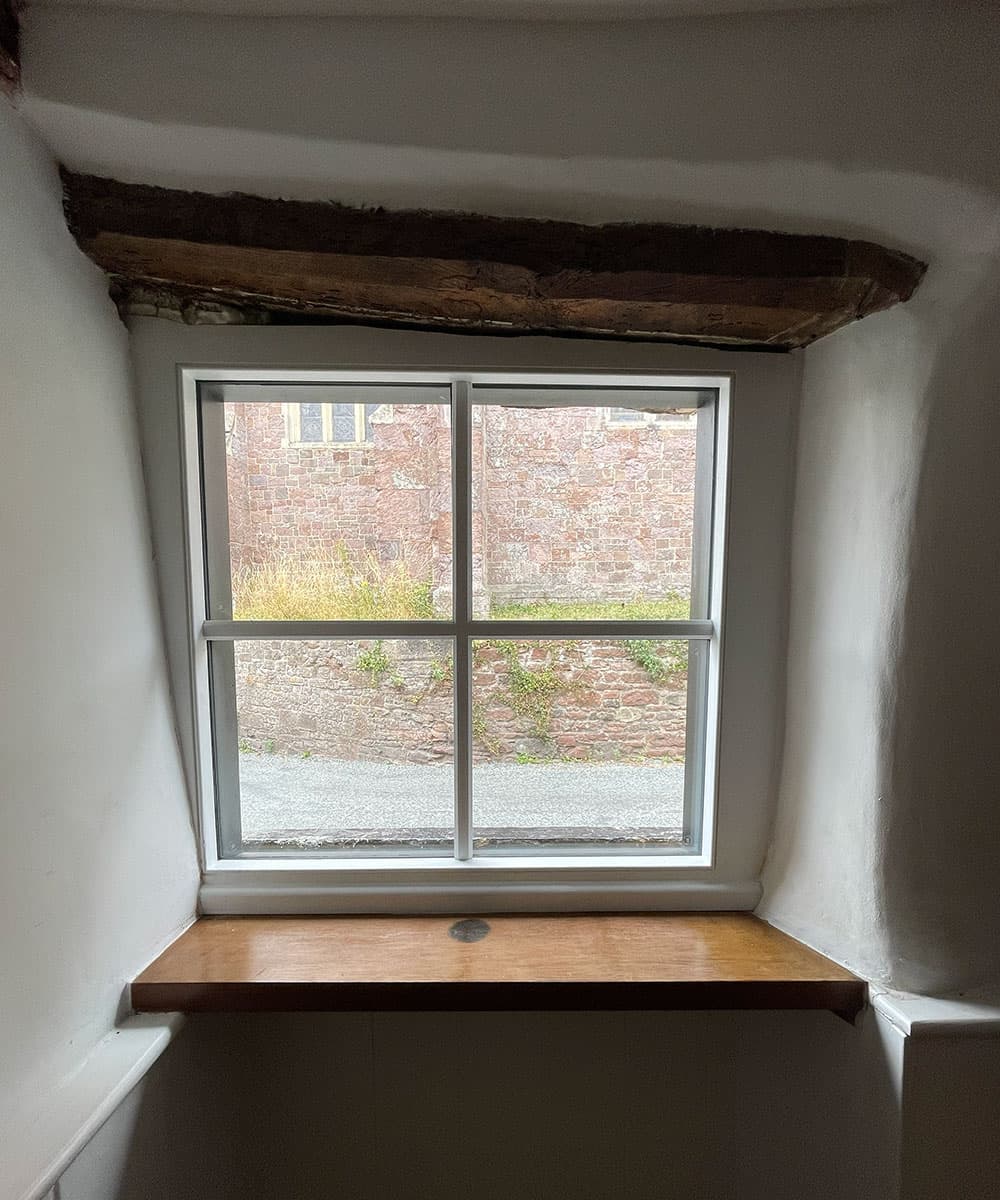
Almost every quotation we send has a timber specification on it, and it is the line most people skip over. It is also the line that decides how the joinery looks in fifteen years, how often you will be out with a paintbrush, and a surprising amount of the price.
Devon makes the decision matter more than it does inland. Salt air off the estuaries, rain driven horizontally off the moor, and long damp winters where nothing properly dries out: that is a hard environment for anything external. A timber that performs perfectly well in a sheltered garden in the Midlands can have a genuinely shorter life on a west-facing elevation near Exmouth.
So here is an honest comparison of the three we specify most, what each is actually good at, and where we would and would not spend the money.
The short version
Accoya for exposed external joinery that will be painted, especially wide components. Oak where the grain is meant to be seen or the wear is heavy, which makes it right for an oak staircase far more often than for a painted window. Softwood where it is sheltered and painted and the budget is better spent elsewhere. The rest of this explains why, because the honest answer depends on which elevation we are standing in front of.
Accoya: the stable one
Accoya is radiata pine that has been acetylated, a chemical modification that changes how the timber holds water. Because it takes up far less moisture than untreated softwood, it barely moves with humidity and it is extremely resistant to rot and insect attack. It carries a long manufacturer warranty against decay, and in our experience it earns it.
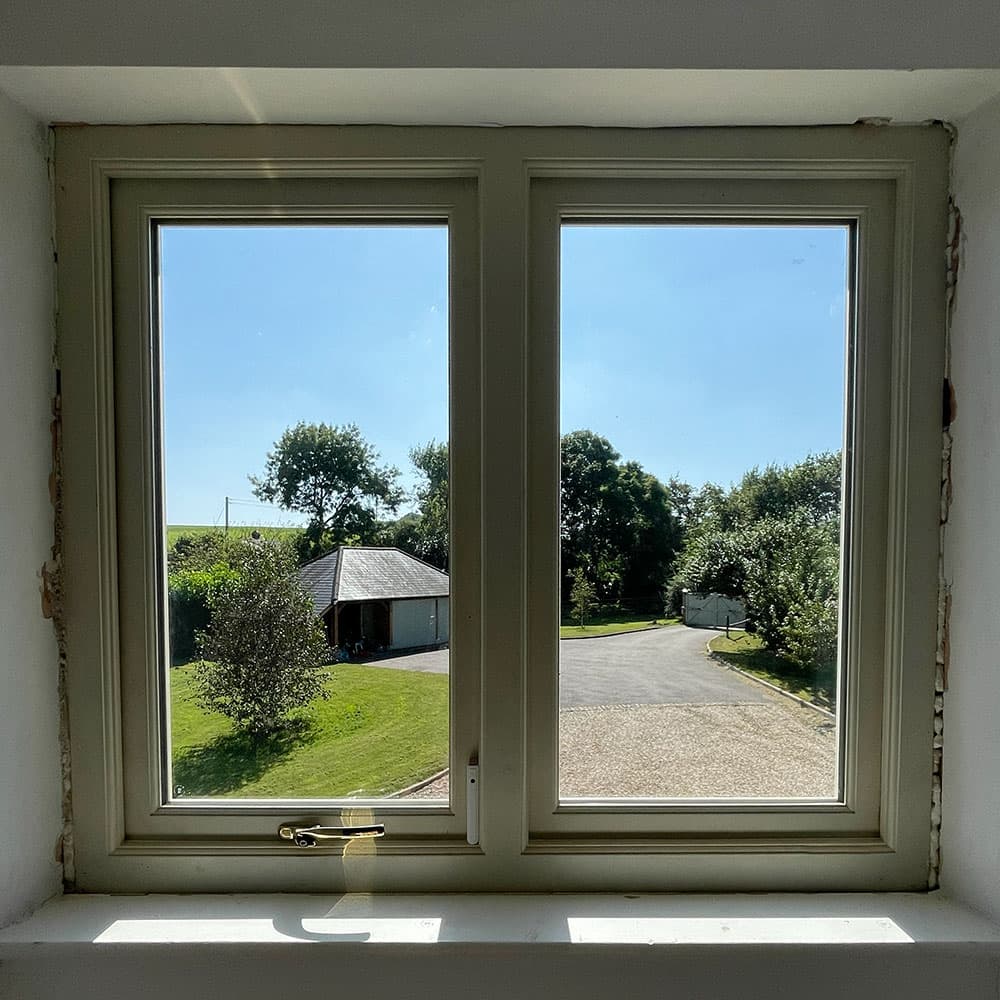
For external joinery in an exposed position that is going to be painted, it is usually the correct engineering choice, and it is our default recommendation for timber windows and external doors on coastal and west-facing elevations. Its real advantage shows on big components: a wide bifold stile or a tall door panel in Accoya stays flat where the same section in softwood would be inclined to move.
It also holds paint unusually well, precisely because it is not swelling and shrinking underneath the film. That means longer intervals between repaints, which over twenty years is a real cost saving and not just a convenience.
The honest downsides: it costs more than softwood, it is pale and fairly characterless so it is not a timber you leave bare for the look of it, and it needs stainless fixings because the acetic chemistry is hard on mild steel. There is also a slight vinegary smell when it is freshly machined, which disappears entirely once the joinery is finished and fitted, but does surprise people in the workshop.
Oak: the one you can see
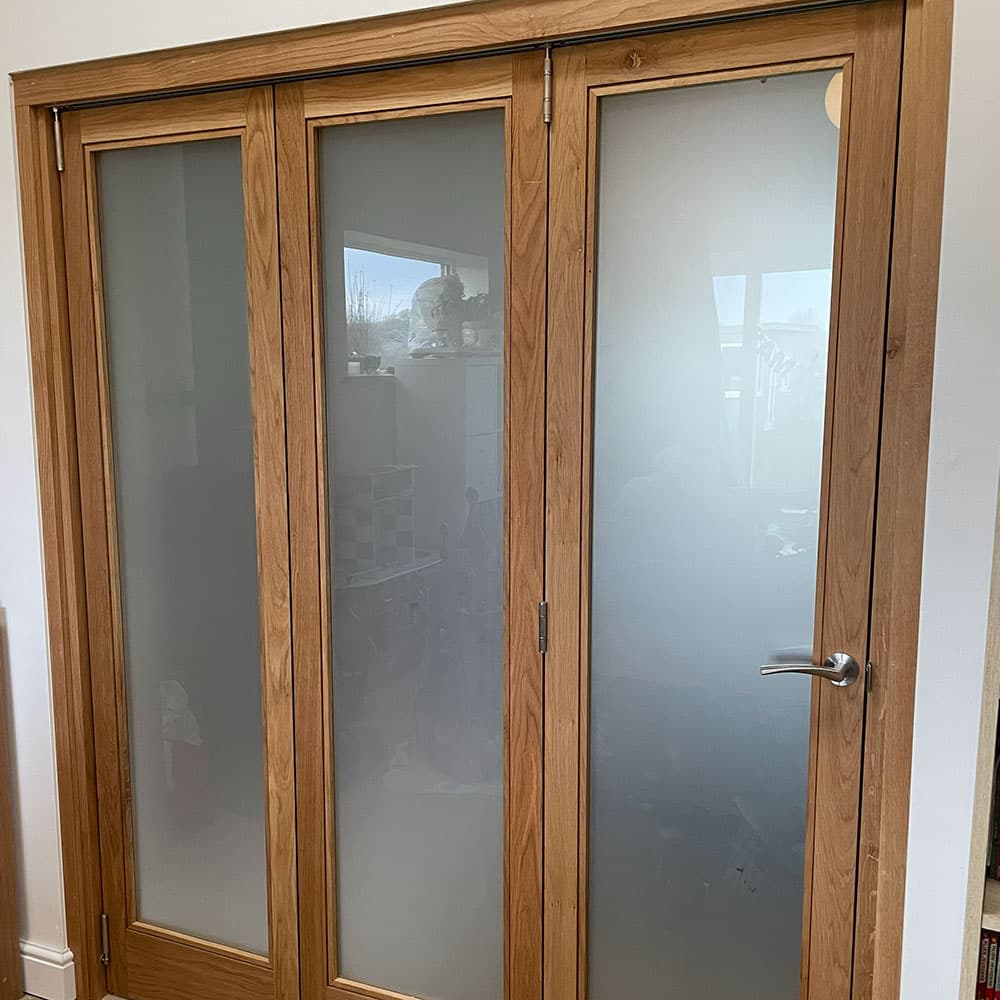
European oak is dense, hard and durable, and it has the grain that people actually want to look at. It is the timber most people picture when they picture solid joinery, and for good reasons that survive scrutiny rather than just tradition.
Where oak genuinely wins is anywhere the timber is on show and anywhere it takes physical wear. A staircase tread, a handrail, an oak front door, a run of balustrade spindles: these are all places where oak will look better in twenty years than it does on the day it goes in, which is not something you can say about most materials.
It is naturally durable outside too, so an oak gate or front door will last without chemical treatment. But oak moves more than Accoya with the seasons, and on a wide external component that movement is the thing that cracks a paint film. It also contains tannins, which react with iron to produce black staining and can wash out onto pale stone beneath new oak joinery for the first year or so. Both are manageable: stainless or bronze fixings, and patience with the staining, which weathers out.
The other honest point is cost. Oak is the most expensive of the three by a clear margin, and on a painted component you are paying for grain nobody will ever see. If the specification says painted and the position is exposed, that is usually Accoya's job rather than oak's.
Softwood: better than its reputation, in the right place
Softwood covers a wide range, and that is exactly why it has a mixed reputation. Fast-grown, wide-ringed, knotty stock is poor material for joinery and there is a lot of it about. Good slow-grown European redwood, properly selected, is a different product: stable enough, takes paint well, and has been used for external joinery in this country for centuries.
It is worth remembering that the original sash windows in most period Devon houses are softwood, and plenty are still in service two hundred years on. That is partly because nineteenth-century softwood was denser than most of what is available now, and partly because those windows were maintained. Which is the real point about softwood: it performs well when it is painted and repainted on time, and fails quickly when it is not.
So softwood is the sensible choice on sheltered elevations, on internal joinery, and wherever the budget is better spent on getting the joinery right than on upgrading the material. We also use it routinely for the painted elements of a staircase, with hardwood treads and handrail where the wear is. Where we would steer you away from it is a west-facing coastal elevation, a large glazed door, or any situation where you know realistically that it will not get repainted when it should.
Cost over twenty years, not on the quotation
Comparing the three on purchase price alone is the most common mistake, because the maintenance interval differs enough to change the ranking. Softwood is cheapest to buy and the most demanding to keep. Accoya costs more up front and holds a paint finish longer, so the repaint cycle stretches. Oak sits at the top for material cost but needs no treatment to survive if you are prepared to let it silver.
We are not going to put numbers on that here, because the honest answer depends on the component, the exposure and who does the decorating. What we will do is tell you at quotation stage what the realistic maintenance looks like for the specification we are proposing, including when the cheaper timber is the better buy.
What usually decides it
In practice it comes down to three questions. Is it painted, or is the grain on show? How exposed is the elevation? And how much movement can the component tolerate? Painted, exposed and wide points at Accoya. Grain on show, or heavy wear, points at oak. Painted, sheltered and modest in size points at softwood, and there is no shame in it.
There is also no requirement to pick one timber for a whole house. Most of the projects we quote use two or three, placed where each one earns its cost: Accoya on the weather elevation, oak on the front door and the staircase, softwood on the sheltered side and the painted internal work. A specification that uses the same timber everywhere is usually one that has not been thought about.
Tell us the elevation, what the component is and whether you want it painted, and we will tell you which of the three we would use and why, including when that is the cheapest of the three. We would rather specify a timber you will be happy with in fifteen years than sell you the most expensive one on the list.
Explore our bespoke windows and bespoke doors, or request a free estimate and we will come and look at the job properly.