Why oak for a front door
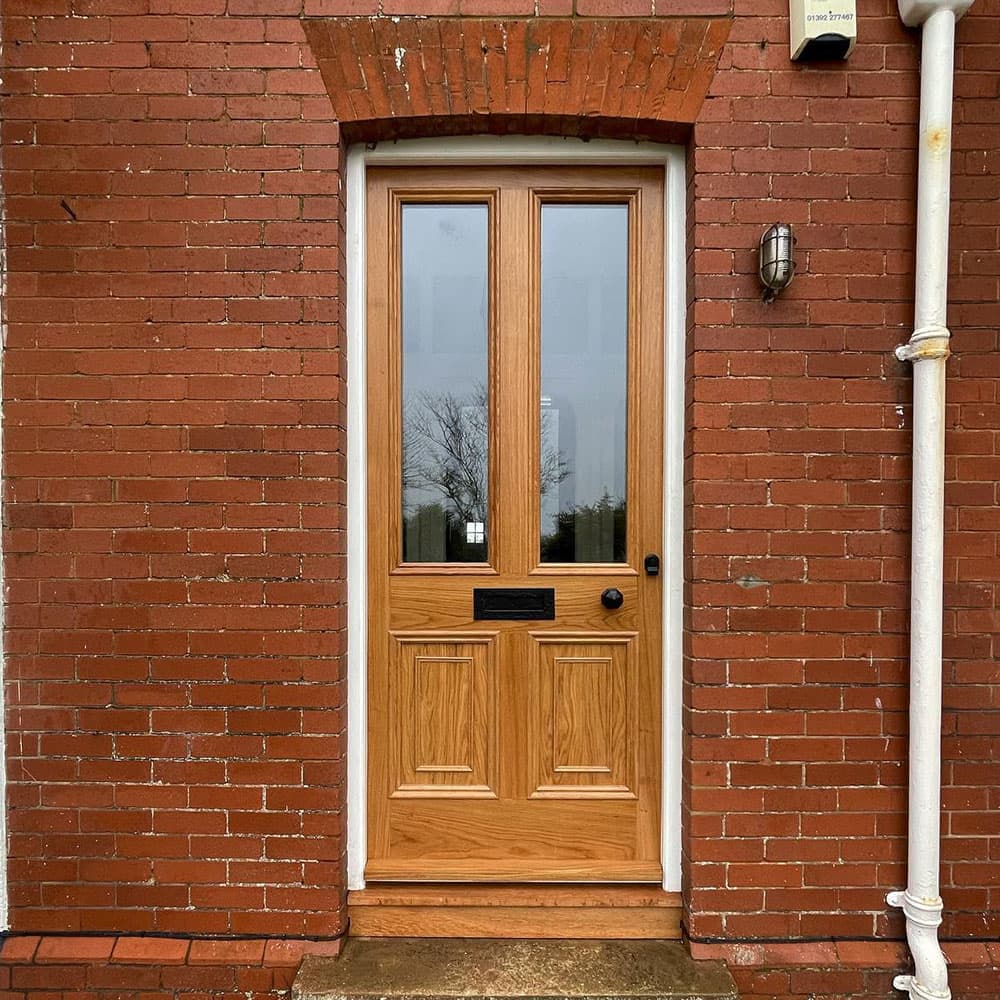
Oak is dense, hard, and it ages well rather than merely lasting. A south-west-facing front door in Devon takes driven rain, salt air off the estuaries and strong summer sun, and oak handles all three better than almost anything at a comparable price.
It is also heavy, which is part of the appeal and part of the engineering. An oak door closes with a weight that a lightweight door cannot imitate. It also means the frame, the hinges and the locking all have to be specified to carry it, which is one of the reasons an oak door is not simply a standard door in a different material.
This page is about the timber. For door styles, glazing, ironmongery, security and the buying process, see front entrance doors.
Grain and character
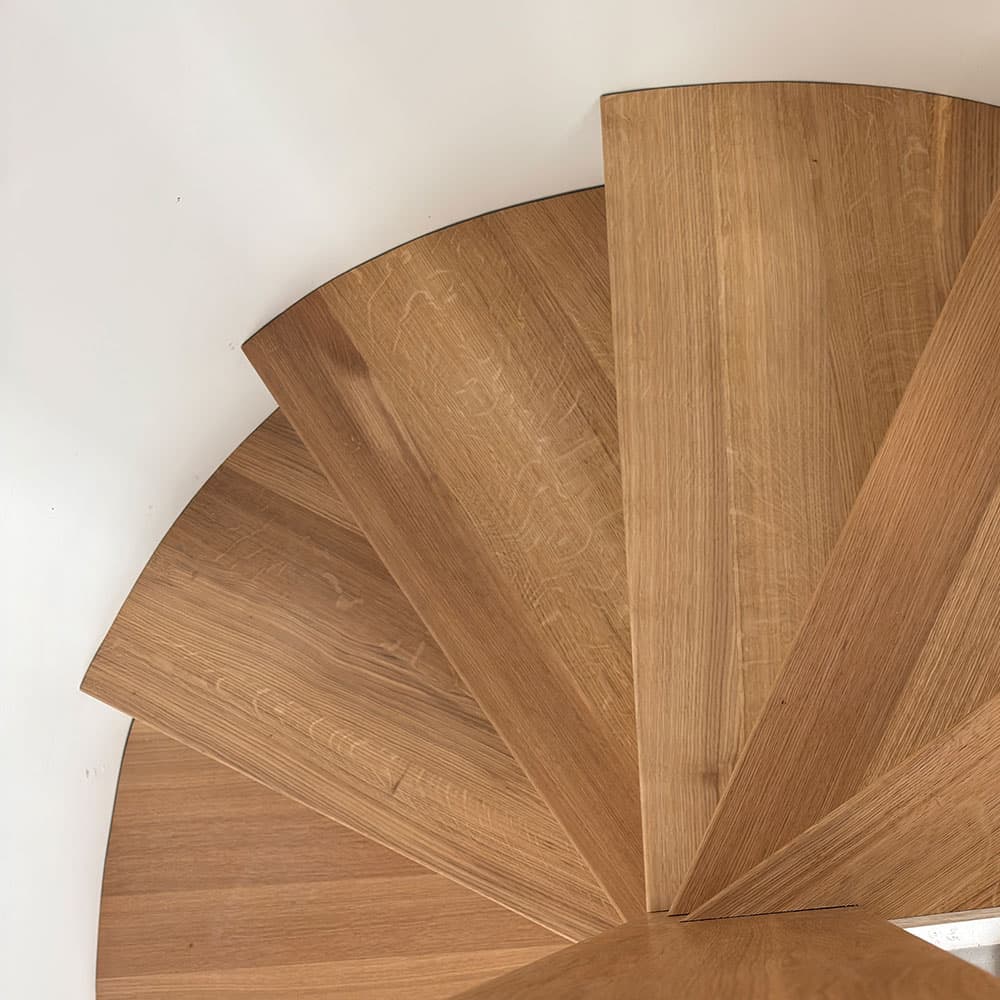
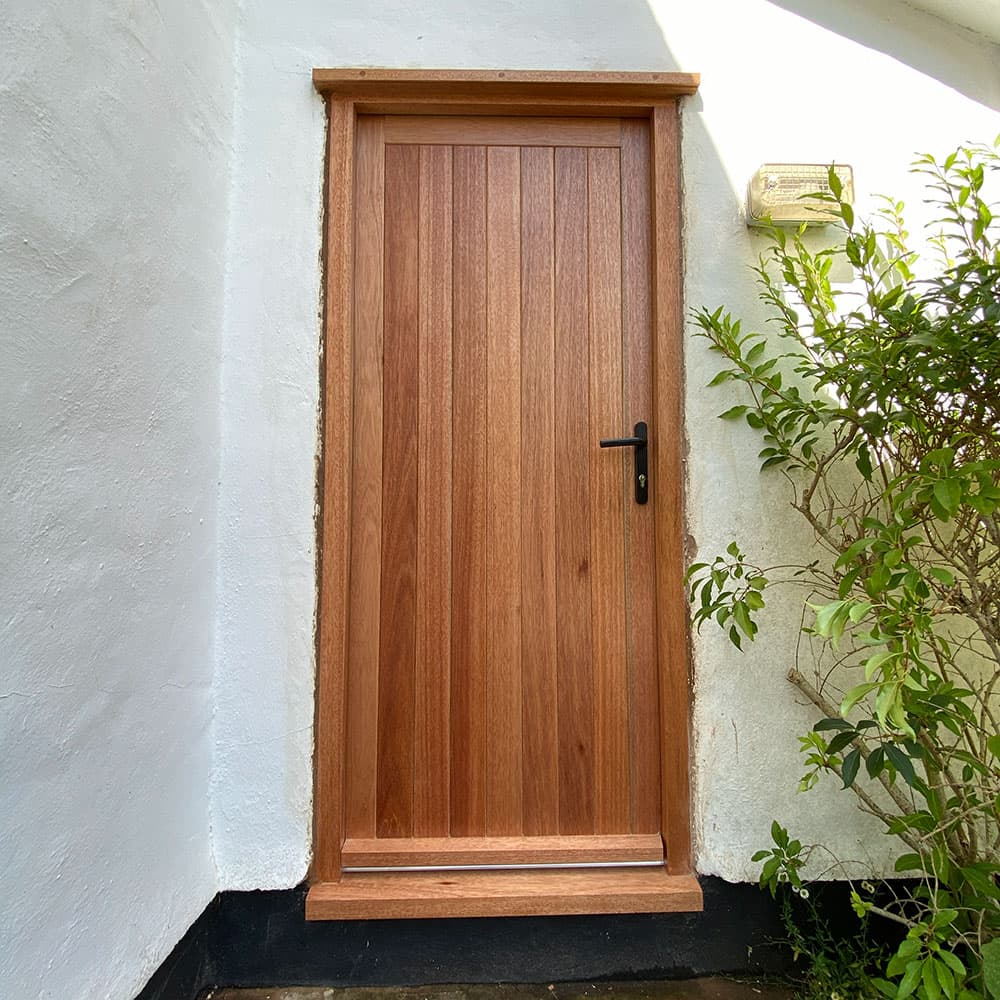
No two oak doors look the same, which is most of the point of choosing it. Cleaner, more consistent stock gives a calmer, more formal door; timber carrying more knots and figure gives a door with obvious character, and on a period property that is very often what people actually want.
Colour varies too, from pale honey through to a warmer brown, and it shifts over the first year or two as the timber settles and the finish matures. An oak door is darker at five years than at five weeks, and that is worth picturing before you choose a finish.
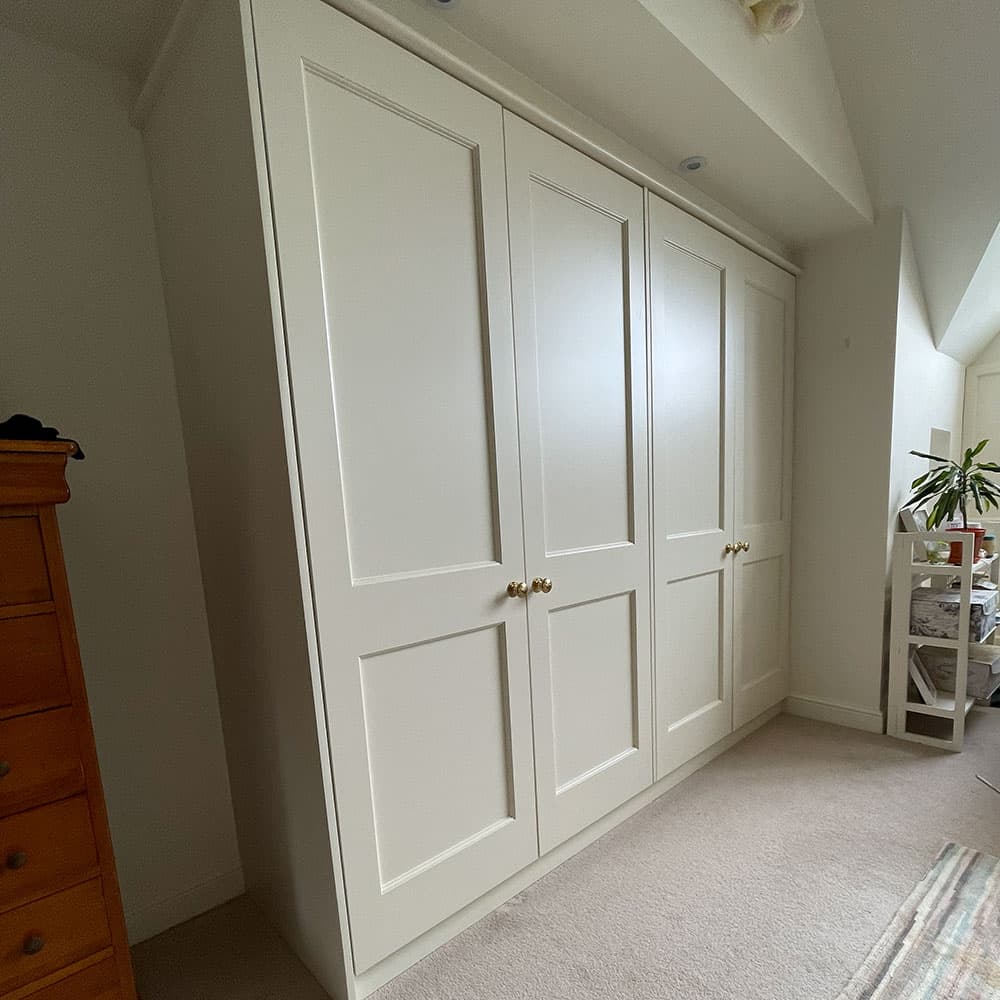
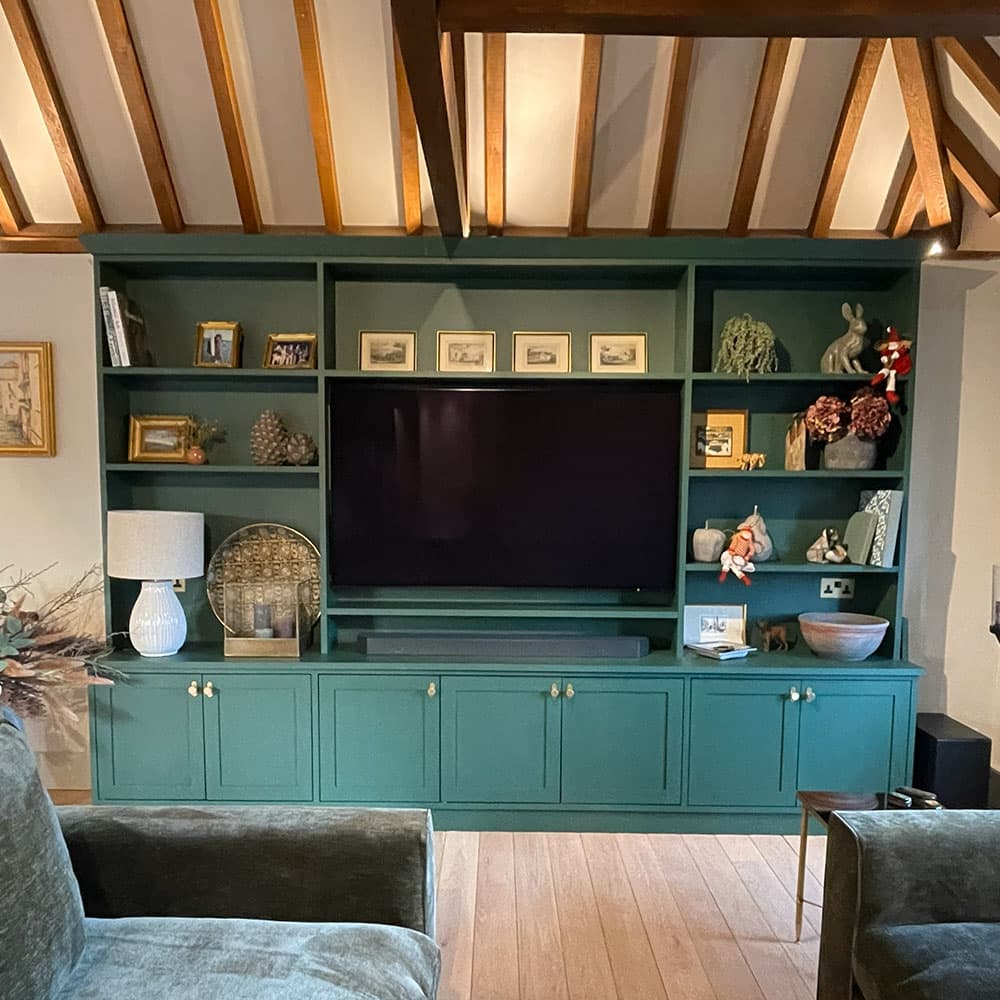
We will talk through what we are proposing at quotation stage and why, and you can see examples of our door work to get a sense of how different oak reads once it is finished.
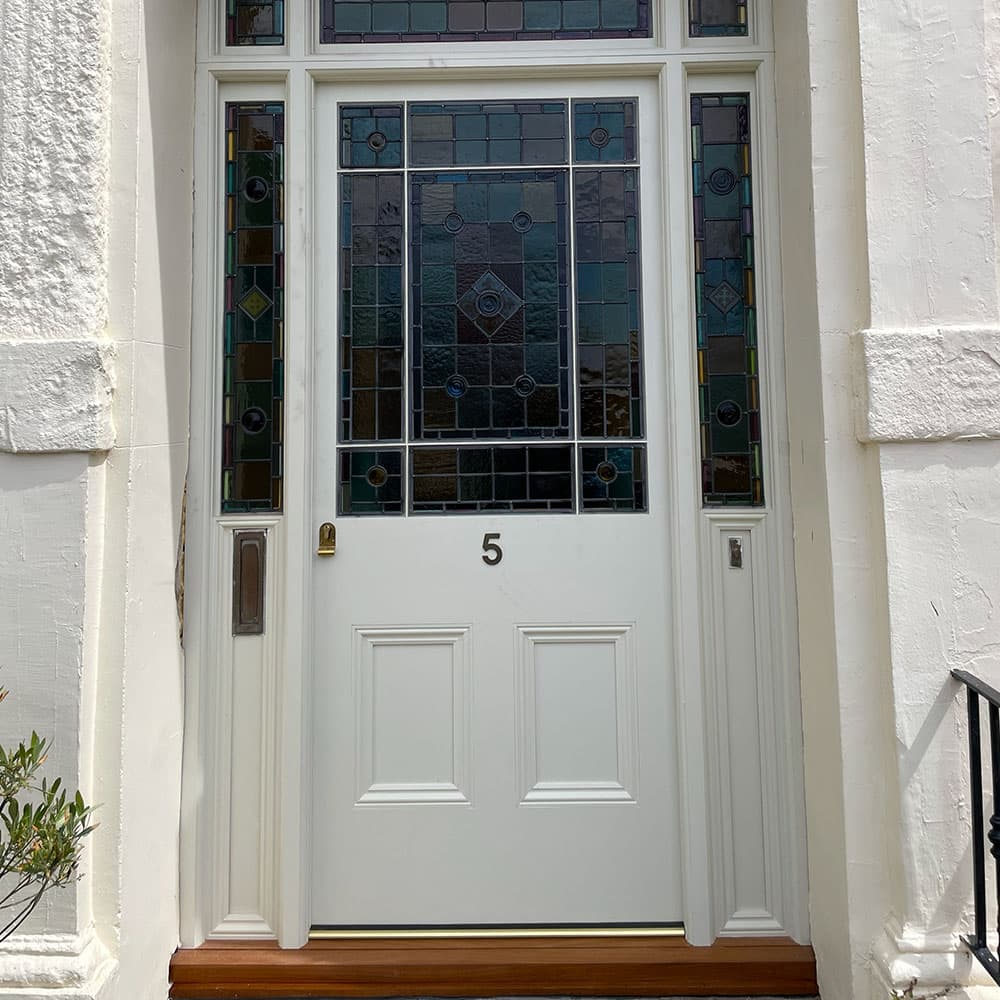
How oak moves, and what we do about it
All timber moves with humidity and oak is no exception: it shrinks and swells across the grain through the year. A door built as a single slab will cup. A door built as a frame and panel lets the panels float in their grooves so they can move without splitting the rails, and an engineered construction, with a stable laminated core and solid oak faces, stays flatter still on a wide door.
Oak also contains tannins, which react with iron. Mild steel fixings and fittings in contact with oak will cause black staining, and tannin washing off a new oak door can mark pale masonry beneath it in the first year or so. Stainless or bronze fixings avoid the first problem; the second generally weathers out, and is worth knowing about before it happens rather than afterwards.
Oiled, stained or painted
Oiled oak keeps the grain visible and warms to a deeper gold over the first year. Left unmaintained it silvers, which some people want and some people very much do not. Stained oak holds a colour and offers more UV protection. Oak can be painted, and on some period properties that is the correct answer, though it does cover the thing you paid for.
Realistic maintenance on an oiled door: re-oiling in the first year or two, then less often as the finish establishes. A west-facing coastal door will want it more frequently than a sheltered north-facing one. This is the main ongoing difference between oak and a painted factory finish, and it is the honest trade-off for the grain being on show.
Oak, Accoya or painted hardwood?
Oak is not automatically the right answer, and it would be a poor page that pretended otherwise.
Accoya is more dimensionally stable than oak and more resistant to rot, and it takes paint extremely well. For a door that is going to be painted, and particularly for a wide or very exposed door, Accoya is often the better engineering choice: you are not paying for grain you intend to cover. That is why it is our usual recommendation for exposed positions elsewhere on the site.
Oak wins where the grain is the point, where the weight and the feel matter, and where the house asks for it. If you are weighing the three up, our guide to Accoya, oak and softwood on the Devon coast goes through the comparison properly.
Oak front doors across Devon
Every door is drawn, cut and finished in our workshop at Clyst St Mary, then fitted by our own team or coordinated with your builder. We work across Exeter, Exmouth, Sidmouth, Topsham and the surrounding villages.
If you want to talk through whether oak is the right call for your opening, request a free estimate and we will come and take a look.