Most sash windows are in better condition than they look
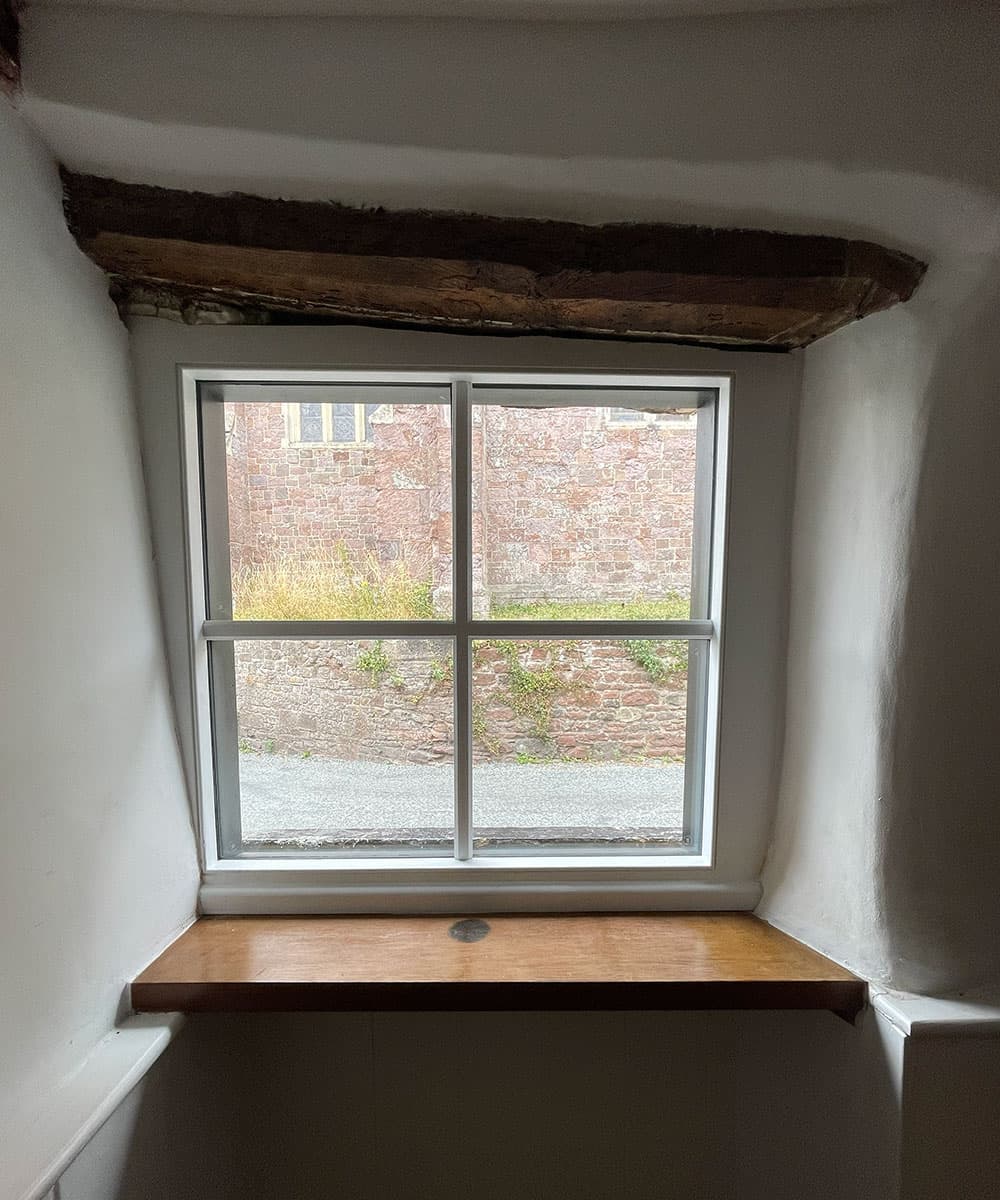
A window that sticks, rattles, draws a draught or has paint flaking off it looks like a window at the end of its life. Often it is not. What has usually failed is the paint, a sash cord, and the seal around the glass. The box frame and the sashes themselves are frequently sound underneath.
That matters, because the timber in an original window is generally better than what you can buy today. Slow-grown Baltic redwood and heart pine from the nineteenth century is denser and more stable than most modern softwood, so where the sashes are sound, keeping them is both the cheaper option and the better one. If the windows need redecorating rather than any work from us, we will say that.
What the work covers
We survey each window rather than the elevation as a whole, because they rarely fail at the same rate. We look at the box frame, the condition of both sashes, the cords, pulleys and weights, the sill, and how much original glass survives.
Where the sashes are sound, the work covers overhauling the mechanism so the window runs and holds properly, renewing cords and rebalancing the weights, re-puttying and re-securing or re-glazing the glass, fitting draught seals, and redecoration.
Scope is worth being plain about. We do not patch decayed timber into an original sash. Where the timber itself has gone, we make a new sash or a new window to match the original rather than piecing the old one back together: same profiles, same glazing bar widths, same proportions, taken off the window that is coming out. It is a cleaner job and it lasts longer than a repair in the same position would.
In practice most elevations are a mixture. We regularly overhaul the sound windows on a house and make new sliding sash windows for the ones that are past saving, matched so you cannot tell which is which.
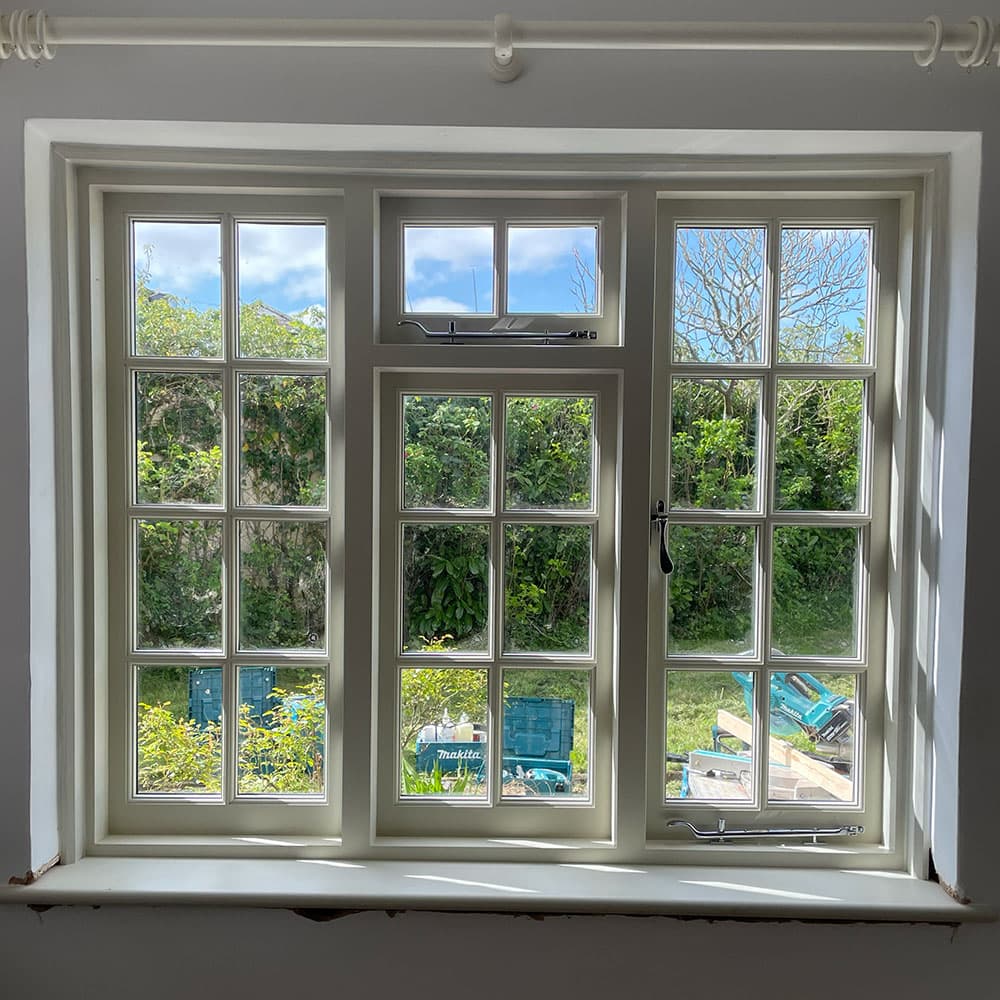
Draughts, rattle and slim double glazing
This is the part that makes the biggest difference to living with the window, and it is why most people get in touch.
Slim-profile double-glazed units can go into your existing sashes, keeping the correct putty line and glazing bar width, so from outside the window looks as it did. Whether it is possible on a particular window depends on the rebate depth and on whether the sashes can carry the extra weight, which is a survey question rather than a catalogue one. Discreet brush or compression seals set into the staff bead, parting bead and meeting rail then stop the rattle and cut the draught substantially, and are invisible from outside.
Draught-proofing is done as part of this work rather than as a job on its own, because the seals need the sashes overhauled and running correctly to seat properly. Sealing a window that does not close squarely does not achieve much.
As we say on the sash windows page, you will not reach the U-value of a modern casement this way, and we would rather tell you that up front. What you get is a marked improvement in comfort and noise with the building's character untouched.
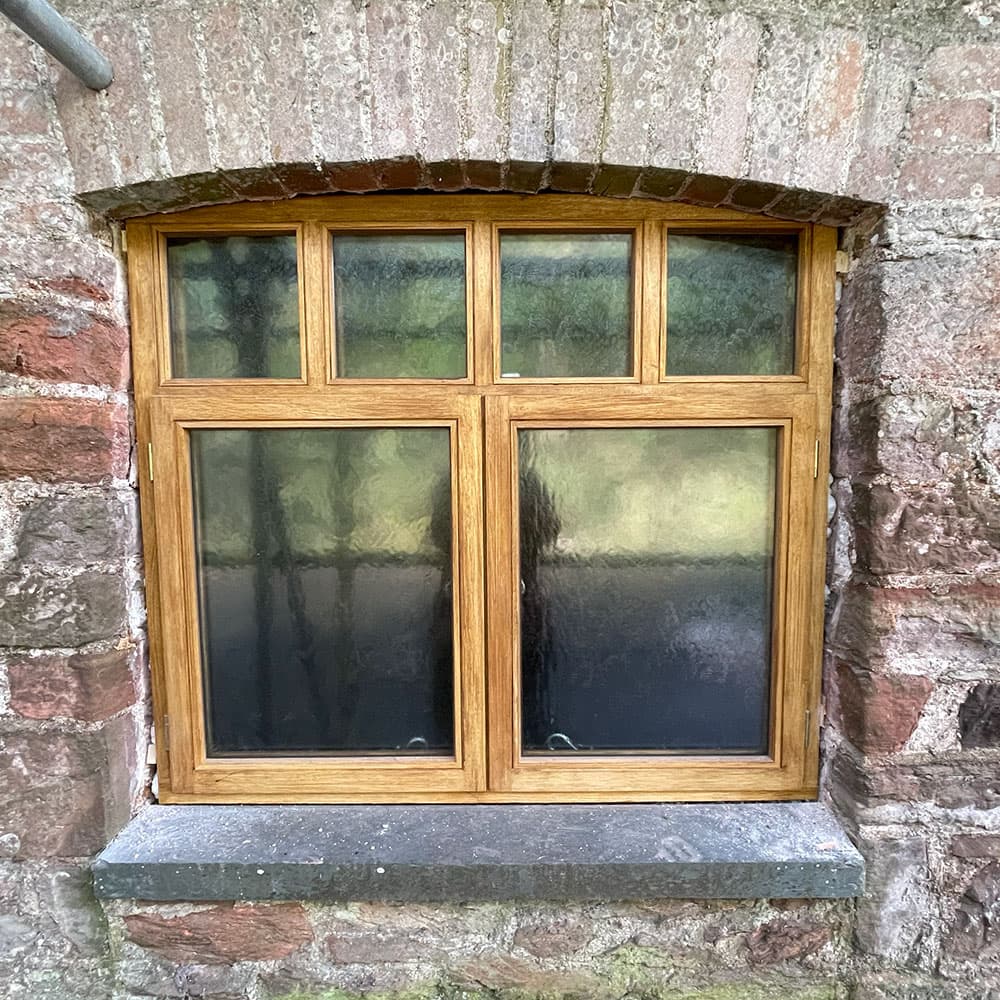
Conservation areas and listed buildings
Restoration is very often the route a conservation officer prefers, and because nothing changes externally it frequently needs no consent at all. That is close to the opposite of the position you are in with replacement, where the application can turn on the glazing specification.
The rules vary between Exeter, East Devon and Teignbridge, particularly on slim double glazing, so the honest answer to what will be approved is usually that it depends on your officer. Our guide to planning permission for windows in a conservation area sets out what generally needs consent and what does not.
Overhaul, or new windows?
Overhaul is the better answer where the sashes and boxes are sound, where the house is listed or in a conservation area, or where the original glass and proportions are part of why you bought it. New windows are the better answer where decay has gone into the timber, where the existing windows are poor later replacements with nothing worth keeping, or where a whole elevation needs to match.
There is no reason to treat every opening the same way, and we would rather give you a window-by-window answer than a single number for the house.
Sash window work across Devon
We work from our workshop at Clyst St Mary, just outside Exeter, across the city and out through Exmouth, Topsham, Sidmouth and the surrounding villages. Sashes come back to the workshop where the work needs a bench, and the glazing, seals and reinstallation are done on site by our own team.
If you are not sure whether your windows want overhauling or replacing, request a free estimate and we will come and look at them properly.