
Do You Need Planning Permission for New Windows in a Conservation Area?
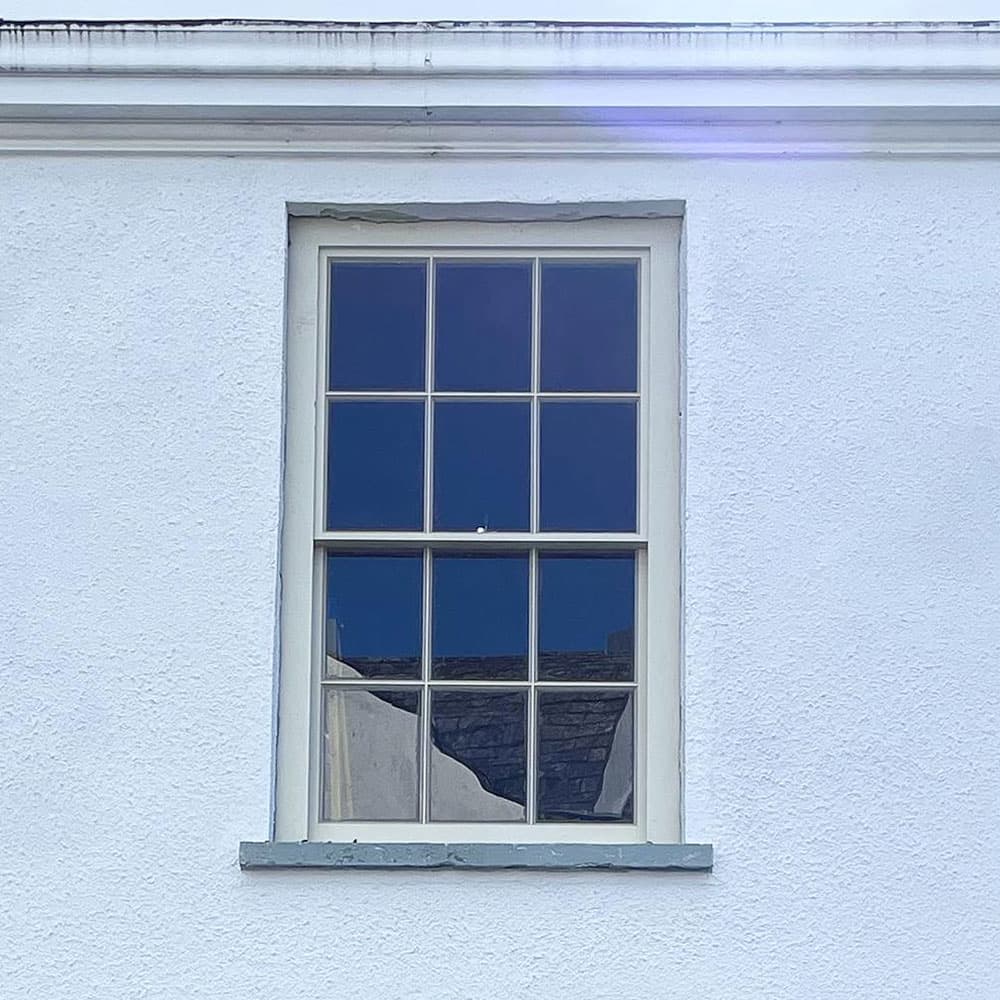
It is the question we are asked more than any other, and the honest answer is that it depends on three things: whether the house is listed, whether it sits in a conservation area, and what exactly you are replacing.
Those three things are often confused with each other, and getting them straight is most of the battle. Here is how they actually work, and what we see happen in practice across Exeter, Exmouth, Topsham and the East Devon villages.
Listed and conservation area are two different things
A listed building is protected in its own right, inside and out. There are around half a million in England and Devon has more than its share. If your house is listed, you need listed building consent to alter it, and that includes the windows. Replacing a window in a listed building without consent is a criminal offence, not a planning technicality. It rarely goes that far, but it is worth knowing that the law is unusually sharp here.
A conservation area protects the character of a place rather than any individual building. Most of central Exeter, most of Topsham, and large parts of Sidmouth, Dartmouth and Totnes are conservation areas. Being in one does not automatically mean you need permission for windows, and this is where most of the confusion lives.
A house can be both, one, or neither. Check which you are before you do anything else. Your local authority's planning portal will tell you in about two minutes, and it is free.
If your house is not listed and not in a conservation area
Replacing windows on a normal house is usually permitted development. You do not need planning permission, as long as the new windows are similar in appearance to the old ones. Upper-floor windows on a side elevation need to be obscure-glazed and non-opening below 1.7m, which catches people out occasionally.
You do still need to satisfy building regulations for thermal performance, safety glazing and means of escape. That is a different process from planning, it is usually handled through a competent-person scheme or a building notice, and it applies whether or not you needed planning permission.
If you are in a conservation area but not listed
Here is the part that surprises people: for most houses in a conservation area, like-for-like window replacement does not need planning permission. Conservation area status does not remove permitted development rights for windows by itself.
Two things can remove them.
The first is an Article 4 direction. This is a formal step a council takes to withdraw permitted development rights in a specific area, and it is very often aimed precisely at windows and doors, because uPVC replacements are what erode a Georgian street fastest. If an Article 4 direction covers your street, you need planning permission for window replacement even though your neighbour two streets over does not. Article 4 directions are mapped on the council's website. Look before you order.
The second is that “like for like” has to actually mean like for like. A timber sash replaced with a timber sash of the same proportions and glazing pattern is a replacement. A timber sash replaced with a uPVC casement is an alteration, and it will be treated as one.
If your house is listed
You need listed building consent, and you should assume the conversation will be about detail rather than about whether you may do it at all.
Conservation officers are usually not trying to stop you replacing rotten windows. What they want is for the replacement to be right: the correct glazing bar width, the correct horn profile on a sash, the correct box depth and sill projection, the correct timber, and often the correct glass. Where the existing windows are original, they will normally expect repair to be considered before replacement, and they are frequently right to.
The strongest applications we see include a survey of the existing window, a drawing of the proposed one at a sensible scale, and a short honest statement about why repair is not the better option. We produce drawings suitable for submission as a matter of course.
The slim double glazing question
This is the live argument in Devon at the moment, and the answer varies by authority.
Slim-profile double glazed units are typically 11 to 14mm overall against 24mm for a standard modern unit, which means they will fit into a traditional sash section with the putty line and glazing bar width kept correct. From the pavement, a well-executed slim-glazed sash is very hard to tell from single glazing.
Different Devon authorities, and even individual officers within the same authority, can take different views on whether that is acceptable in a listed building. The honest answer to “will this be approved?” is usually “it depends on your officer”. In conservation areas without an Article 4 direction it is generally not a planning question at all.
If it matters to you, ask early, informally, before you commission anything. Most conservation officers will give you a steer, and a five-minute phone call is cheaper than a refused application.
What we would do in your position
Check whether you are listed, in a conservation area, or under an Article 4 direction. Those three checks are free and take ten minutes.
If any of them apply, talk to the conservation officer before you commit to a specification. Get the existing windows surveyed and recorded properly, because that record is what the application rests on. And be genuinely open to repair, because a sash box that is sound in the main is often worth keeping even when the sashes are not.
If you are still weighing up the style itself, our guide to sash versus casement windows is a useful next read.
Then choose a maker who has done it before. We have been making sliding sash windows and casement windows for period properties across Devon for over 25 years, and we are used to talking to conservation officers directly.
This article is general guidance, not planning advice. Rules vary between authorities and change over time. Always check with your own local planning authority before you commit to anything.
If you are working out what your options are, request a free estimate and we will come and look at the windows.