
Wood vs Glass Balustrades: Which Is Right for Your Home?
When it comes to choosing a balustrade for your staircase, landing or balcony, two materials tend to top the list: timber and glass. Both are beautiful, both are safe when properly made, and both can completely transform the feel of a space. So how do you decide?
At Devon Joinery, we design and handcraft bespoke balustrades in both wood and glass for homes across Exeter and the wider Devon area, so we've helped a lot of homeowners weigh up this exact question. Here's an honest look at how the two compare, and how to work out which is right for your home.
First, what they have in common
Before the differences, it's worth saying that whichever you choose, a few things stay the same. Both wooden and glass balustrades have to meet UK building regulations, which set minimum heights and limit the gaps a balustrade can have (so a 100mm sphere can't pass through). And whether it's timber or glass, a bespoke balustrade is measured, designed and finished to fit your staircase exactly, rather than forced to fit from a kit. The choice between them is really about look, feel and lifestyle, not about quality or safety.
The case for wooden balustrades
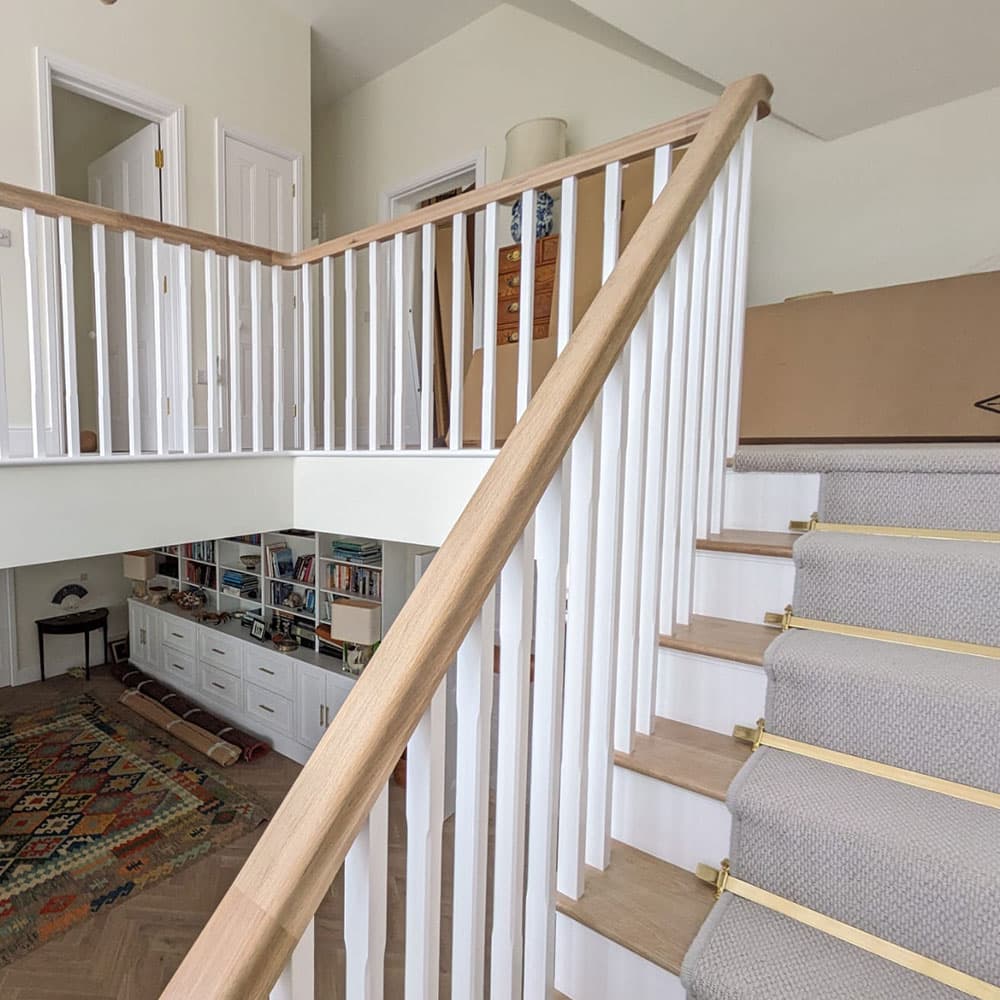
Wood is the classic choice, and for good reason. There's a warmth and character to timber that's hard to replicate, and it suits an enormous range of homes, from cosy cottages to grand period properties.
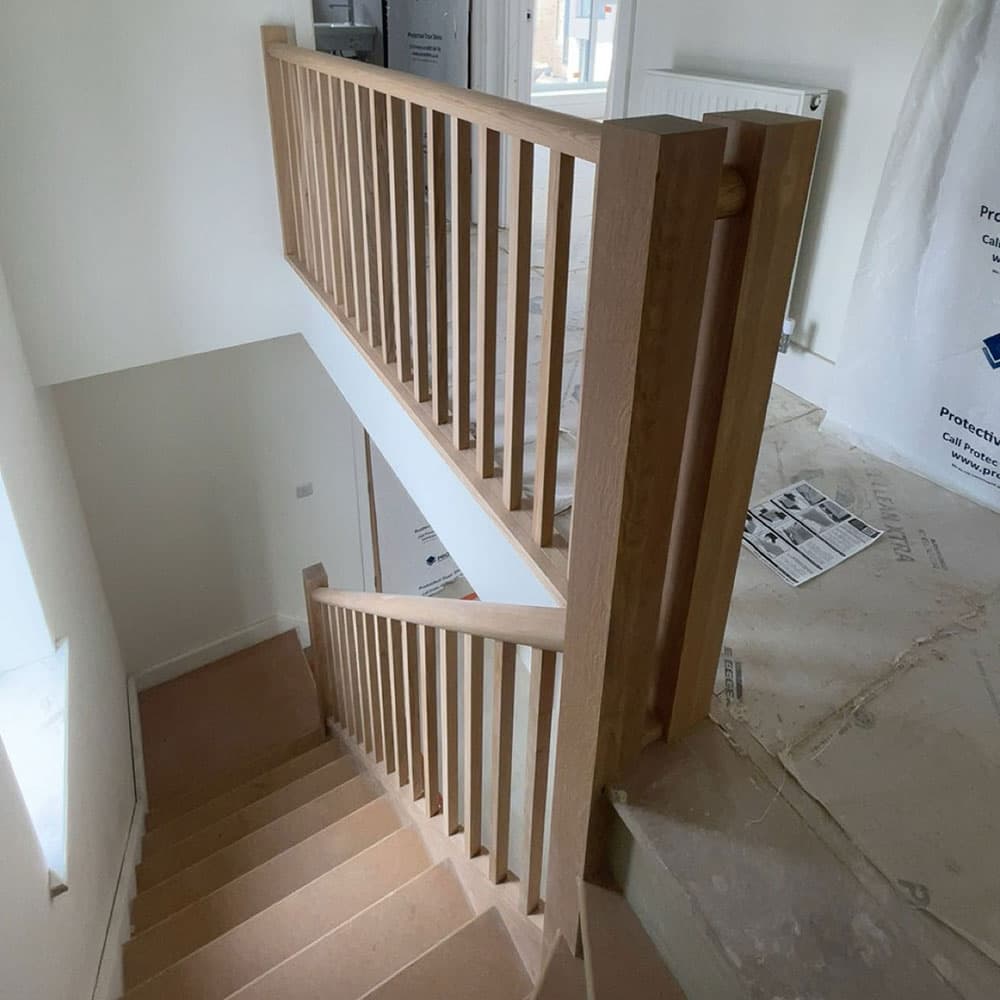
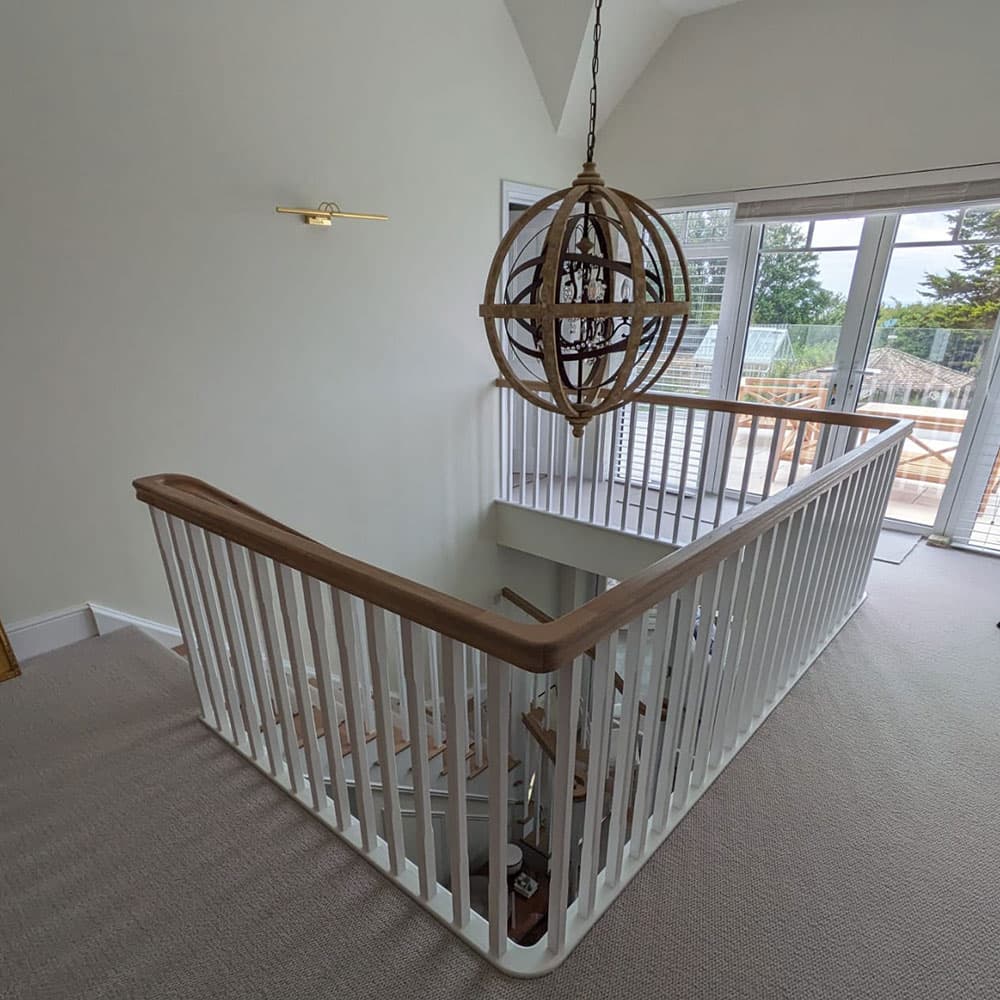
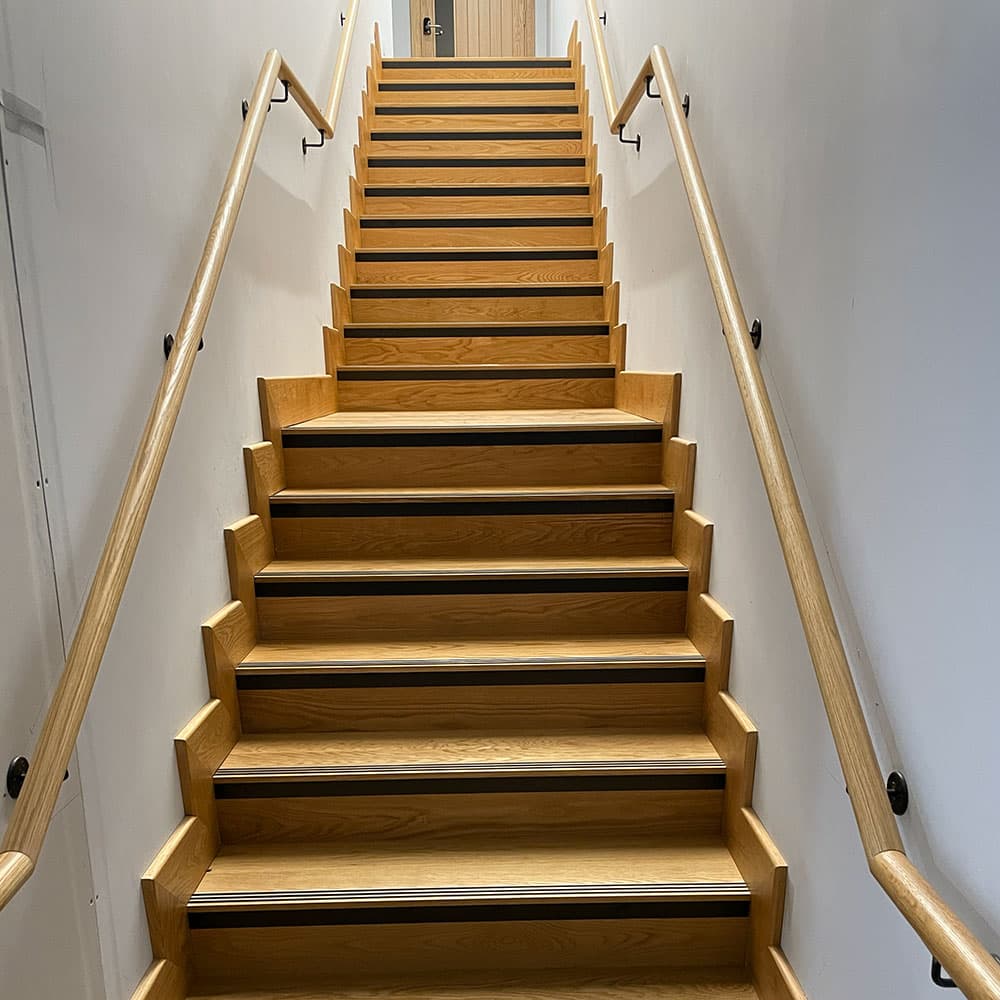
If you live in an older or period home, which Devon has no shortage of, wooden balustrades often feel like the natural fit. Hand-turned spindles, a shaped handrail and a richly grained timber can complement original features beautifully. We work with premium hardwoods such as oak, ash and walnut, each with its own colour and character, and the design possibilities are almost endless: traditional turned balusters, clean square spindles, or something entirely your own.
Timber is also forgiving over a lifetime. It can be sanded, re-oiled or repainted as tastes change or wear shows, so a wooden balustrade can be refreshed rather than replaced. For families with young children, some homeowners also prefer the reassuring solidity of timber and the fact that it doesn't show every fingerprint.
The case for glass balustrades
Glass is the modern favourite, and its biggest strength is what it doesn't do: it doesn't block light or sightlines. A glass balustrade lets daylight flow through a stairwell and keeps a room feeling open, airy and larger than it is. In a smaller home, a narrow hallway or a property where you want to make the most of a view, that can be transformative.
Visually, glass is sleek and almost invisible, which makes it a popular choice in contemporary interiors and new builds where the goal is clean lines and minimal fuss. It can be frameless for the most seamless look, or paired with timber or metal fixings for something a little softer.
Glass also tends to make a space feel brighter and more spacious without drawing attention to itself, so if you've invested in a striking staircase, a feature wall or a view across the garden, glass lets those elements take centre stage rather than competing with them.
Maintenance: an honest comparison
This is where lifestyle really matters. Glass looks stunning when it's clean, but it does show fingerprints, smudges and dust, so if you have children or pets, expect to keep a cloth handy. The upside is that cleaning is quick and there's no finish to maintain over the years.
Wood asks for less frequent but slightly more involved care. A quality finish will protect it for a long time, and the occasional re-oiling or touch-up keeps it looking its best. Many people find that low-key upkeep part of the appeal of a natural material.
What about cost?
It's difficult to give a single figure, because so much depends on the design, the size of the run and the specific materials. As a general guide, a simple timber balustrade and a simple glass balustrade can be comparable, while the cost of either climbs with complexity, curved sections, premium hardwoods or frameless structural glass all add to the price. The most useful way to compare is to get a quote based on your actual staircase, which is something we're always happy to provide.
Why not have both?
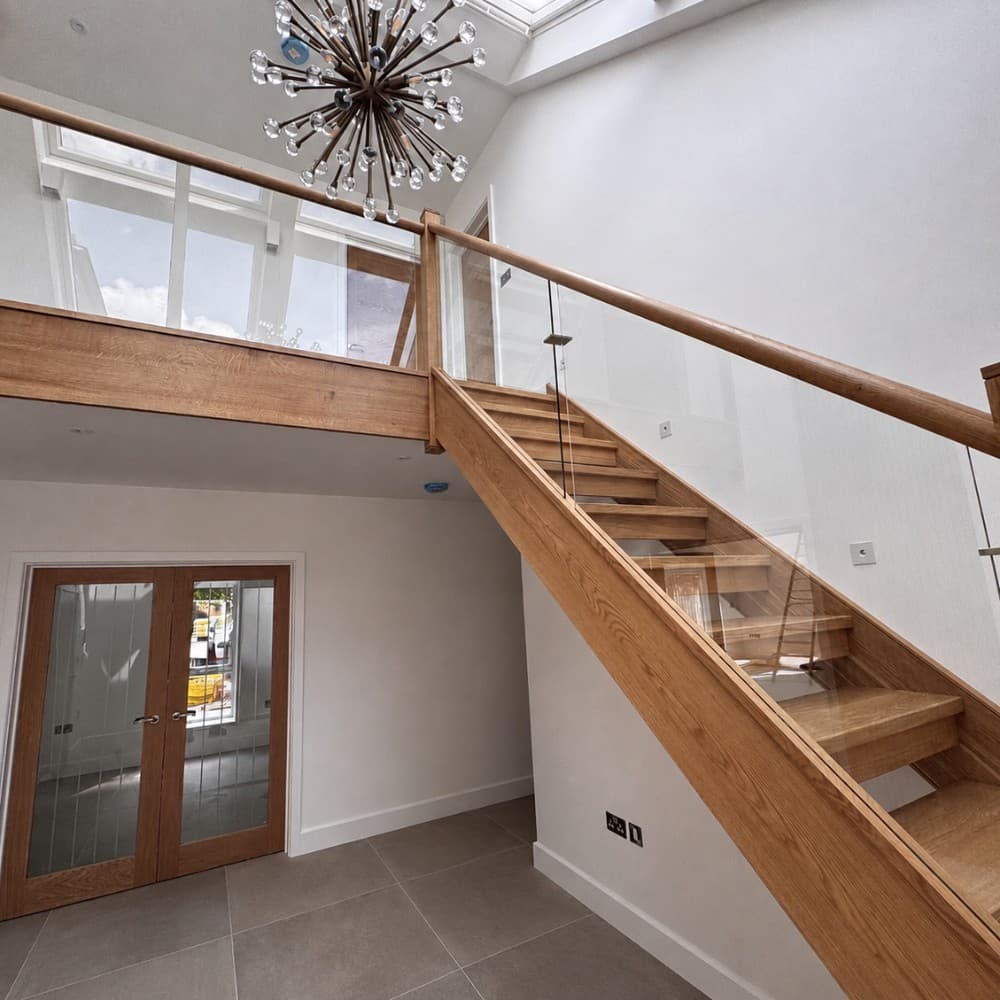
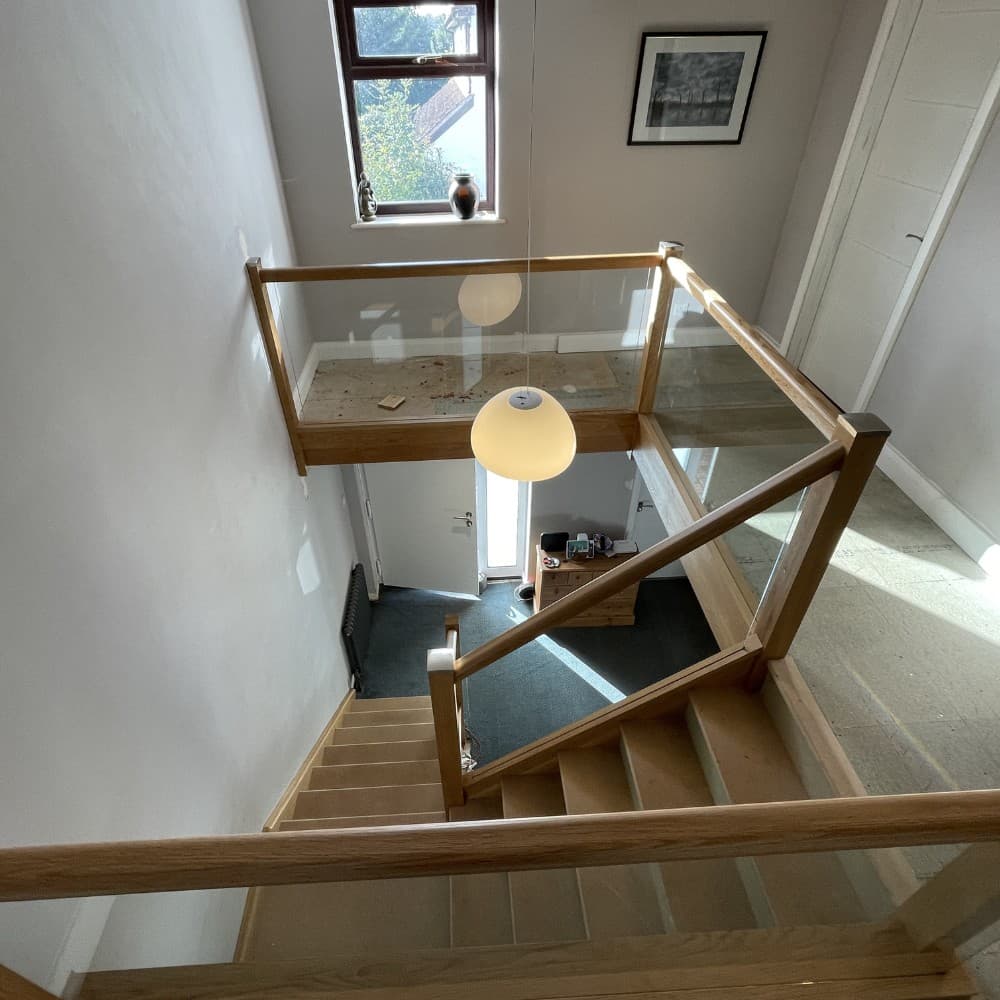
Here's the option many people don't realise is available: you don't have to choose. Some of our favourite balustrades combine the two, pairing a warm timber handrail you can comfortably grip with glass infill panels below. You get the light and openness of glass with the warmth and tactility of wood, and the result often suits both traditional and modern homes. It's a genuinely best-of-both-worlds approach, and because everything we make is bespoke, the mix is entirely up to you.
How to decide
As a rough rule of thumb:
- Choose wood if you have a period or traditional home, you love natural materials and character, or you want something that can be refreshed and re-finished over the years.
- Choose glass if you want to maximise light and space, you have a contemporary interior, or there's a view you'd rather not interrupt.
- Consider a mix if you can't decide, want the warmth of a timber handrail with the openness of glass, or simply want something a little different.
There's no universally “right” answer, only the one that's right for your home, your style and how you live.
Talk it through with us
The best way to settle the wood-versus-glass question is to see both against your own staircase and budget. At Devon Joinery, we'll talk through your ideas, show you the options and design a bespoke balustrade made and fitted to suit your home, wherever you are in Exeter or across Devon.
Explore our bespoke balustrades or request a free estimate and we'll help you find the perfect fit.